
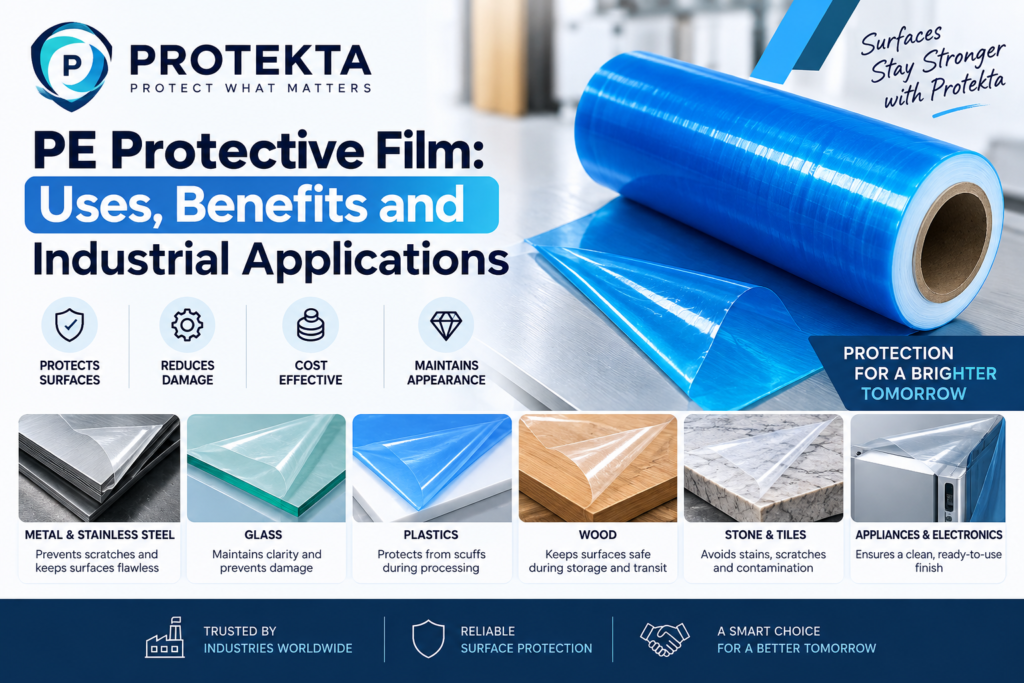
Walk through any factory that handles metal sheets, glass panels, or finished plastic parts, and you’ll spot rolls of thin, semi-transparent film stacked near the production line. That’s PE protective film doing its job quietly in the background. It’s one of the most common materials used to guard surfaces during manufacturing, transport, and storage, and most people never think about it until a product arrives damaged without it.
This article looks at what PE protective film actually is, why manufacturers rely on it so heavily, and where it fits across different industries. If you’re trying to figure out whether it’s the right choice for your production line, this should give you a clear picture.
What Is PE Protective Film?
PE protective film is a thin plastic sheet made from polyethylene, coated with a light adhesive on one side. You apply it to a surface such as metal, glass, or plastic, and it stays there through handling, shipping, and installation. Once the product reaches its final stage, you peel the film off, and the surface underneath should look untouched.
Polyethylene comes in a few different forms, mainly low-density polyethylene (LDPE) and high-density polyethylene (HDPE). LDPE is a highly branched plastic with low crystallinity, which gives it its flexibility, softness, and lower melting point. That branched structure is what makes polyethylene protective film so easy to stretch, wrap, and mold around edges and corners without tearing.
Why Polyethylene Works So Well for Protection
Here’s why polyethylene became the default choice for protective films for different material across so many industries. It’s flexible, lightweight, and resistant to moisture. A comparison study on HDPE and LDPE films found that HDPE showed greater melting stability, tensile strength, and structural rigidity, while LDPE offered more flexibility, which explains why manufacturers pick one over the other depending on the job. If a surface needs a soft, conformable wrap that bends easily around curves, LDPE-based film usually wins. If the application calls for a tougher, more rigid layer that resists punctures during rough handling, HDPE plays a bigger role.
Polyethylene also holds up against a wide temperature range without breaking down, which is part of why it shows up in food wraps, industrial liners, and outdoor construction materials alike. This same thermal stability is what lets a roll of PE protective film sit on a metal sheet in a hot warehouse for weeks without degrading or fusing to the surface.
Main Benefits of PE Protective Film
1. Cost-Effective Protection at Scale
Polyethylene is one of the more affordable plastics to produce, so films made from it stay budget-friendly even when ordered in bulk. For manufacturers protecting hundreds or thousands of panels a month, that price point matters as much as performance.
2. Flexibility and Easy Application
The branched molecular structure in LDPE gives the film a soft, pliable feel. It stretches around edges and corners without cracking, which makes it a good fit for irregular shapes, curved panels, and profiled surfaces that flat, stiff films can’t wrap properly.
3. Moisture and Dust Resistance
Polyethylene forms a tight barrier against water and airborne dust. This is part of why it’s used in cling wraps for food storage and drum liners for chemicals, and the same barrier property and custom packaging improves-pouch-design carries over into industrial protection, keeping moisture and grime off finished surfaces during transit.
4. Clean, Residue-Free Removal
A properly formulated PE protective film releases from the surface without leaving sticky marks behind, as long as it’s removed within its rated timeframe. This matters most on polished or painted surfaces where any leftover residue means extra cleaning before the product ships out.
5. Adaptable Adhesive Strength
Manufacturers can adjust the adhesive coating on polyethylene protective film to suit different jobs, from a light, low-tack layer for glass to a firmer grip for rough metal sheets that see more handling.
Industrial Applications of PE Protective Film
Metal Fabrication and Sheet Processing
Stainless steel, aluminum, and painted metal sheets pick up scratches fast during cutting, bending, and stacking. A layer of PE film applied right after production keeps the surface clean through every step until final installation.
Glass and Window Manufacturing
Glass panels are prone to scuffs from dust and handling. A lighter-tack PE protective film gives enough coverage to prevent surface damage without bonding so tightly that it’s hard to peel off later.
Plastic Sheet and Acrylic Production
Plastic sheets used in signage, displays, and construction often ship with a protective layer straight from the factory. This keeps the surface scratch-free until the installer removes it on-site.
Construction and Architectural Panels
Aluminum composite panels, decorative sheets, and profiled metal used in building facades often sit outdoors for weeks before installation. PE protective film with UV resistance keeps these surfaces safe from weather exposure during that window.
Appliance and Electronics Manufacturing
Refrigerators, washing machines, and other appliances with painted or brushed metal exteriors get wrapped in protective film right off the assembly line, so they arrive at the retailer looking new.
Automotive Parts and Components
Bumpers, trim pieces, and painted body panels often travel long distances between the parts supplier and the assembly plant. A protective film layer prevents scuffing during that transit.
PE Protective Film vs. Other Protective Materials
It helps to know where polyethylene film stands next to other common options.
- PE film vs. paper-based protection: Paper doesn’t offer moisture resistance and tears more easily during handling. PE film holds up better in humid or wet conditions.
- PE film vs. PVC film: PVC can be stronger for heavy-duty jobs, but it costs more and is harder to recycle. Polyethylene remains the more common choice for general-purpose protection because of its price and ease of use.
- PE film vs. bubble wrap: Bubble wrap suits cushioning against impact, while PE protective film suits surface-level scratch and dust protection on flat or curved panels.
Each material has its place, and the right one depends on what kind of damage you’re trying to prevent, impact, moisture, dust, or surface scratching.
What to Look for When Choosing a PE Protective Film
- Adhesion level suited to the surface. Rougher surfaces usually need a bit more tack, while smooth surfaces like glass need less.
- UV resistance for outdoor exposure. If panels sit outside before installation, check that the film is rated for it.
- Thickness and puncture resistance. Thicker gauges hold up better during rough handling, stacking, and transport.
- Clean removal after the expected exposure period. Ask for the film’s rated removal window and stick to it.
- Compliance documentation. Look for suppliers who provide safety data sheets and follow standards such as RoHS and REACH for chemical safety.
Common Mistakes When Using PE Protective Film
- Leaving film on far past its rated period. This raises the chance of residue buildup or the film bonding too tightly to the surface.
- Storing rolls in direct heat or sunlight. This can change the adhesive’s behavior before it’s even applied.
- Using a general-purpose film for a specialized surface. Coated or composite panels sometimes need a formulation matched to their specific finish.
- Skipping a test patch. A quick test on a sample piece saves a lot of trouble before a full production run.
How Protekta Supports This Application
Protekta, based in Bhiwadi, Rajasthan, works with thermoplastic raw materials including PE, HDPE, LDPE, ABS, and EVA to produce flexible packaging and surface protection films for manufacturers across India. The company follows RoHS and REACH chemical safety standards and provides safety data sheets with its products, which matters if you’re sourcing film for industries with strict compliance requirements.
Protekta Guard is built for metal, stainless steel, glass, and aluminum surfaces, and it’s a good example of how a polyethylene-based film gets tailored for real production settings rather than sold as one generic roll for every job. If you’re not sure which grade or adhesive level fits your surface, it’s worth checking the product details or reaching out directly with your specific application in mind.
Final Thoughts
PE protective film earns its place on so many production lines because protekta does one job well: it keeps surfaces clean and scratch-free without adding much cost or complexity to the process. Whether you’re working with metal sheets, glass panels, plastic parts, or painted surfaces, matching the right grade of polyethylene protective film to your material and exposure time makes the difference between a product that arrives in perfect condition and one that needs rework before it ships.
FAQs
1. What is PE protective film made of?
It’s made from polyethylene, usually low-density polyethylene (LDPE) or high-density polyethylene (HDPE), coated with a light adhesive layer on one side. The polymer type used affects how flexible or rigid the final film feels.
2. How long can PE protective film stay on a surface?
This depends on the film grade. Indoor-use films are often rated for a few weeks, while UV-resistant outdoor films can handle a few months of sun and weather exposure without leaving residue.
3. Is PE protective film safe for painted or coated surfaces?
Yes, as long as the adhesive strength matches the surface. A film with too strong a grip can pull at delicate coatings during removal, so it helps to match the film to the specific finish.
4. What’s the difference between PE protective film and polyethylene protective film?
They mean the same product. Both terms describe a thin polyethylene sheet with an adhesive layer used to shield surfaces from scratches, dust, and moisture during handling and transport.
5. Can PE protective film be recycled?
Polyethylene is widely recyclable, and many manufacturers, including Protekta, recycle plastic film waste generated during their own production process as part of their environmental practices.