
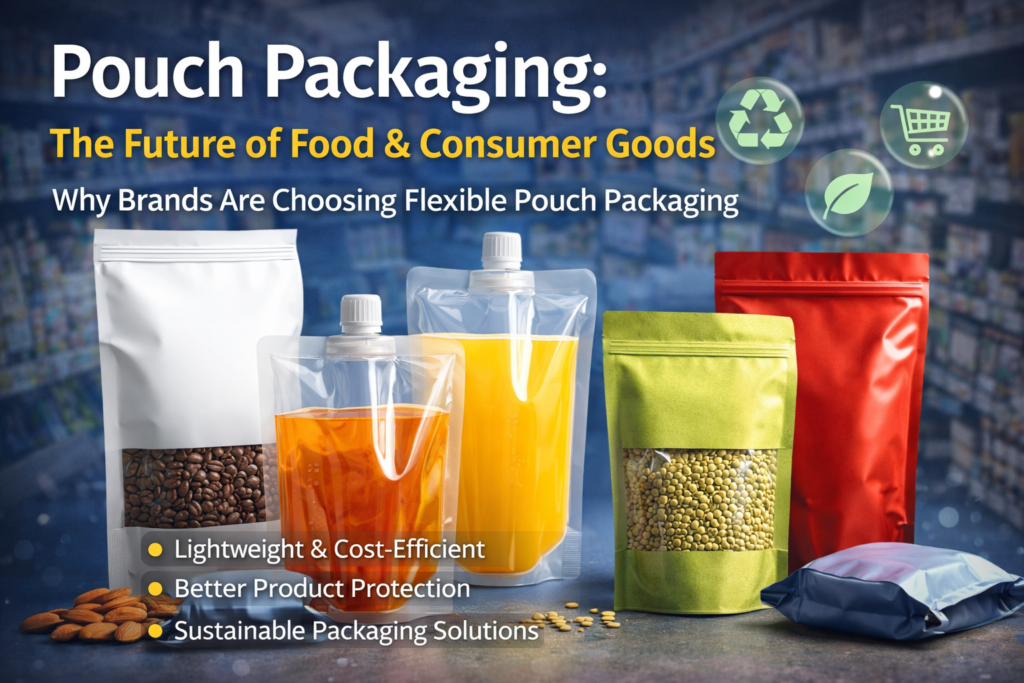
Walk down any grocery aisle today and the shift is obvious. Rigid cans and glass jars still have their place, but flexible pouches have quietly taken over shelf after shelf. From baby food to protein powder, pet treats to laundry detergent, pouch packaging has become the go-to format for brands across almost every consumer category.
This isn’t just a packaging trend. It reflects real changes in how products are made, shipped, stored, and used. Here is a closer look at what is driving this shift and why it matters for manufacturers and consumers alike.
What Is Pouch Packaging, and Why Does It Work?
Pouch packaging refers to flexible, sealed containers made from layers of laminated films, which often include combinations of polyester, polyethylene, aluminum foil, or polypropylene. The specific combination of materials depends on what the product needs: moisture barriers, oxygen resistance, heat tolerance, or all three.
The result is a lightweight, durable container that can be shaped into stand-up pouches, flat sachets, spouted pouches, retort pouches, or zipper-lock bags. Each format serves a different purpose, but they all share the same fundamental advantages over traditional rigid containers.
Let’s break it down by looking at the specific reasons brands are making the switch.
6 Reasons Flexible Pouch Packaging Outperforms Rigid Containers
1.Lower Material Weight Reduces Shipping Costs
A flexible pouch typically weighs 60 to 70 percent less than a comparable glass or rigid plastic container. According to the Flexible Packaging Association, flexible packaging generates less waste by weight and uses less energy to produce than most alternatives. For a brand shipping thousands of units per day, that weight difference adds up quickly in freight costs.
Pouches also stack and pack more efficiently. You can fit significantly more filled pouches into a shipping pallet than the same number of rigid containers, which means fewer truckloads, lower carbon output per unit, and real savings in logistics budgets.
2. Extended Shelf Life Through Barrier Film Technology
One of the strongest arguments for flexible food packaging is what it does to shelf life. Multi-layer laminate films can be engineered to block oxygen, moisture, UV light, and odors, all of which degrade food quality over time.
Modified atmosphere packaging (MAP) takes this further by replacing the air inside a pouch with a controlled mix of gases, typically nitrogen and carbon dioxide. The result can extend product freshness by weeks or even months without relying on preservatives. This is especially relevant for fresh produce, meat, dairy, and ready-to-eat meals.
Companies like Protekta produce MAP films specifically for this purpose. Their Protekta Fresh line is designed to maintain modified atmospheres for perishable products, helping food businesses reduce spoilage and extend distribution reach.
3. Consumer Convenience Drives Purchase Decisions
Consumers want packaging that works for their lives. That means resealable zippers for snacks, spouted closures for beverages and purees, easy-tear notches, and single-serve formats for on-the-go eating. Pouches deliver all of these in a way rigid containers rarely can.
The stand-up pouch, in particular, has become the format that consumers associate with premium and convenient products. Its upright orientation makes it easy to display on shelves and in pantries, and its lightweight nature makes it practical for travel and outdoor use.
4. Better Branding Opportunities on the Shelf
Pouch surfaces accept high-resolution printing on all sides, including the back and gusset panels. That gives brands far more visual real estate compared to a label on a bottle or can.
Metallized films add a premium feel at relatively low cost. Matte finishes, soft-touch coatings, and transparent windows all give brands tools to communicate quality and differentiate products in crowded categories. From a retail shelf perspective, a well-designed pouch simply stands out.
5. Reduced Environmental Footprint Compared to Glass and Rigid Plastics
The environmental picture for flexible packaging is more nuanced than critics suggest. While it is true that multi-layer laminate pouches are harder to recycle than single-material plastics, they use significantly less material to contain the same volume of product.
A study published by the Sustainable Packaging Coalition found that flexible packaging generates less greenhouse gas per unit of product delivered compared to rigid alternatives, when accounting for the full supply chain including manufacturing, transport, and food waste prevention.
The food waste angle is particularly worth noting. Because pouches do a better job of protecting product quality during transit and storage, less food gets thrown away, which has its own environmental cost.
6. Versatility Across Product Categories
The same pouch format that works for a coffee brand works, with different film specifications, for a detergent, a pharmaceutical, or a motor oil brand. This cross-category flexibility makes pouch packaging attractive for contract manufacturers and multi-product companies alike.
Flexible laminate packaging handles dry goods like flour and rice, wet goods like sauces and yogurt, powders like protein supplements, liquids like shampoo, and even industrial products like adhesives and lubricants.
Common Types of Pouch Packaging Used in Food and Consumer Goods
Here is a quick reference of the most widely used pouch formats and what they are suited for:
- Stand-up pouch (SUP): Uses a bottom gusset to stand upright. Common for snacks, coffee, pet food, and frozen items.
- Flat or three-seal pouch: Simple, cost-effective format. Widely used for single-serve sachets, condiment packets, and pharmaceutical doses.
- Spouted pouch: Features a plastic spout and cap for easy pouring or drinking. Popular for baby food, beverages, and liquid soap refills.
- Retort pouch: Withstands high-temperature sterilization. Used for ready meals, seafood, and military rations as a lighter alternative to cans.
- Zipper-lock pouch: Resealable closure allows multiple uses. Common for cheese, deli meats, dried fruits, and trail mixes.
What Goes Into a Flexible Pouch? Understanding the Film Structure
Most pouches are built from two or three layers of different materials, each doing a specific job. Here is how a typical three-layer food pouch is structured:
- Outer layer (PET or BOPP): Provides printability, stiffness, and abrasion resistance.
- Middle layer (aluminum foil or Met PET): Acts as the barrier against oxygen, moisture, and light.
- Inner layer (CPP or PE): Food-contact layer that heat-seals the pouch shut.
The exact combination varies by product. A biscuit pouch needs a good moisture barrier. A coffee pouch needs oxygen and aroma protection. A fresh meat tray needs a gas-permeable MAP film. Manufacturers who specialize in flexible packaging, like Protekta, work with customers to determine the right film structure for each application.
How Is Pouch Packaging Made? A Brief Overview of the Process
Flexible pouch production follows a few key stages:
- Film extrusion or sourcing: Base films (PET, BOPP, PE, etc.) are produced or sourced.
- Lamination: Layers are bonded together using adhesives or co-extrusion to form the composite film.
- Printing: Rotogravure or flexographic printing is applied to the outer layer.
- Slitting: Large laminated rolls are slit into reels of the required width.
- Pouch conversion: Reels are fed into form-fill-seal (FFS) machines or pre-formed into pouches.
Industries Where Flexible Pouch Packaging Has Replaced Rigid Formats
The food industry has led adoption, but the shift is spreading across sectors.
- Food and Beverage
Chips, biscuits, cereals, pasta, dried fruits, coffee, tea, sauces, dairy products, ready meals, and fresh produce all rely on flexible packaging today. The category spans from mass-market staples to artisanal premium products.
- Personal Care and Home Care
Shampoos, conditioners, detergents, and fabric softeners increasingly come in stand-up refill pouches rather than rigid bottles. This reduces plastic use by up to 75 percent per refill compared to a standard bottle.
- Pet Food
Both dry and wet pet food have shifted substantially toward flexible pouches, driven by resealability, shelf appeal, and portioning convenience for consumers.
- Pharmaceuticals
Sachets and unit-dose pouches are standard for powdered supplements, oral rehydration salts, and single-use medication doses. The format supports precise dosing and easy dispensing.
The Global Flexible Packaging Market: Where Things Stand
The global flexible packaging market was valued at approximately USD 248 billion in 2023, according to data from Mordor Intelligence, and is projected to grow at around 4 to 5 percent annually through 2029. Asia-Pacific, led by India and China, is the fastest-growing region, driven by rising incomes, urbanization, and an expanding processed food sector.
India specifically has seen strong growth in demand for flexible packaging films, particularly for food applications. Domestic manufacturers have scaled up capacity to meet this demand, with companies like Protekta, operating from Bhiwadi, Rajasthan, supplying flexible laminate films to brands across multiple sectors.
Sustainability Challenges and the Direction of the Industry
Multi-material laminate pouches face real recycling challenges. Because the layers are bonded together, they cannot be separated through standard municipal recycling streams, which means most end up in landfills.
The industry is working on several solutions. Mono-material pouches, made from a single polymer type (usually polyethylene or polypropylene), can be recycled through flexible film collection programs. Several major brands have committed to switching to mono-material formats for key product lines.
Recyclable barrier pouches, using coatings instead of aluminum foil for barrier properties, are also advancing. Organizations like the Sustainable Packaging Coalition and CEFLEX in Europe are developing guidelines and collection infrastructure to support a circular economy for flexible packaging.
For now, the net environmental case still favors flexible packaging over glass and rigid plastics when you account for material use, transport weight, and food waste prevention, but the industry recognizes that recyclability remains a genuine challenge to address.
What to Look for When Choosing a Pouch Packaging Film Supplier
If you are sourcing flexible packaging films or pre-formed pouches for your products, here are the factors that should guide your decision:
- Film structure capability: Can the supplier work with two-layer, three-layer, and specialty barrier structures like MAP films?
- Substrate range: Do they offer PET, BOPP, Met BOPP, CPP, aluminum foil combinations, and PE options?
- Print quality: High-resolution rotogravure or flexo printing that renders your brand accurately.
- Delivery reliability: On-time delivery matters when your production line depends on consistent reel supply.
- Technical support: Does the supplier help you select the right film specification, or just take an order?
Frequently Asked Questions About Pouch Packaging
What is pouch packaging used for?
Pouch packaging is used across food, beverages, personal care, pet food, pharmaceuticals, and industrial products. It works for dry goods like cereals and snacks, wet goods like sauces and baby food, powders, liquids, and even products that need sterilization through retort processing.
Is flexible pouch packaging safe for food contact?
Yes, when the inner layer is made from food-grade materials like CPP or PE that meet relevant food safety standards. Reputable manufacturers follow Food Safety and Standards Authority (FSSAI) guidelines in India and equivalent standards in other markets. Always confirm food-contact compliance with your supplier before use.
How does pouch packaging extend the shelf life of food?
Multi-layer laminate films block oxygen, moisture, and light, which are the main causes of food spoilage. When combined with MAP technology, where air inside the pouch is replaced with nitrogen or carbon dioxide, shelf life can be extended significantly without added preservatives. The specific improvement depends on the product and film structure used.
Can flexible pouches be recycled?
Multi-layer laminate pouches are generally not recyclable through standard municipal programs because the layers cannot be easily separated. Mono-material pouches made from a single polymer type can be recycled through dedicated flexible film collection points. The industry is actively working on more recyclable formats and infrastructure to support recovery.
What is the difference between a retort pouch and a regular food pouch?
A retort pouch is designed to withstand high-temperature sterilization, typically 121 degrees Celsius, which kills bacteria and extends shelf life to months or years at room temperature. Regular food pouches are not heat-stable at these temperatures. Retort pouches use a more specialized film structure, often including an aluminum foil layer, to handle the thermal stress.