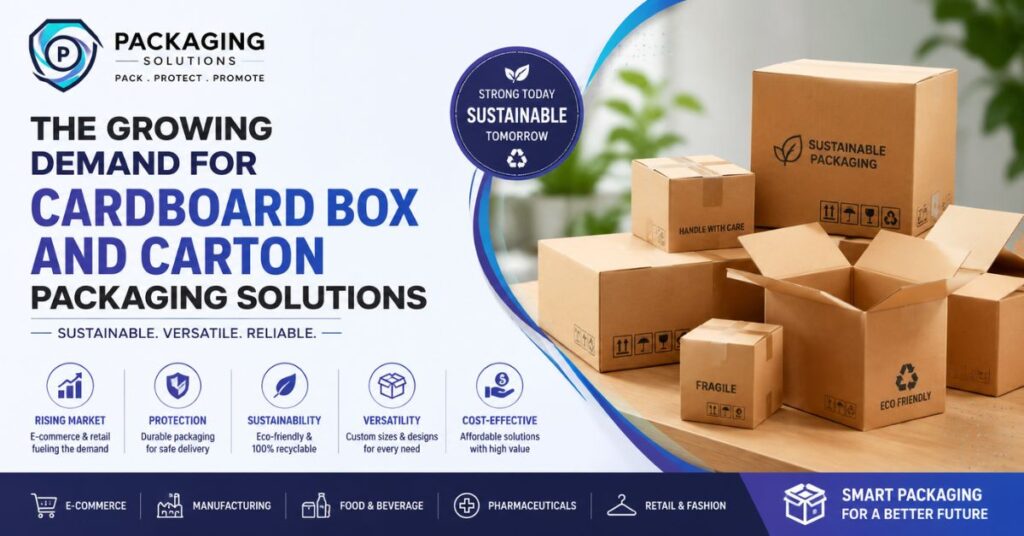
Walk into any warehouse, fulfillment center, or grocery store in India right now, and you will notice something: cardboard is everywhere. Corrugated boxes are stacked to the ceiling. Carton boxes line every shelf. And the businesses responsible for putting products in those boxes are under more pressure than ever to get their packaging right.
Here is what is driving this shift, what it means for brands sourcing box packaging supplies, and how the broader packaging industry is evolving to meet the moment.
Why Cardboard Box Demand Is Growing So Fast in India
The numbers tell a clear story. The Indian corrugated boxes market was valued at USD 7.8 billion in 2024 and is projected to reach USD 18.6 billion by 2033, growing at a compound annual growth rate of 9.6%. That is not a slow drift upward. That is a structural change in how goods move across the country.
Several forces are pushing this growth simultaneously.
E-commerce expansion. Corrugated boxes held a 45.73% share of India’s e-commerce packaging market in 2025. Every order placed online needs a box strong enough to survive a courier ride and arrive without damaging the product inside. As India’s digital commerce reaches deeper into Tier 2 and Tier 3 cities, the volume of boxes leaving fulfillment centers keeps climbing.
The plastic packaging shift. India’s single-use plastic regulations have created a mandatory push toward paper-based and cardboard packaging. From July 2025, every piece of plastic packaging must carry a QR code or barcode for traceability. Rigid packaging must now include at least 30% recycled plastic content, and the extended producer responsibility framework requires brands to account for every unit of plastic they put into the market. For many categories, cardboard has become the less complicated path to compliance.
Food and beverage industry growth. In 2024, food products and beverages accounted for the largest share of corrugated box usage in India. As organized retail expands and packaged food penetrates more households, cardboard box manufacturers are absorbing the volume growth from this sector alone.
Pharmaceuticals and consumer goods. Strong growth in the pharmaceuticals and packaged food sectors is propelling corrugated packaging demand across India. Pharmaceutical companies need carton box packaging that protects product integrity and meets labeling requirements. Consumer goods companies need boxes that survive the supply chain while presenting well on the shelf.
What Cardboard and Carton Box Manufacturers Actually Supply
Let’s break it down by product type, because not all cardboard packaging is the same.
Corrugated Boxes
Corrugated cardboard consists of a fluted sheet sandwiched between two flat liner sheets. This structure gives the box its compression strength. Corrugated boxes come in single-wall, double-wall, and triple-wall configurations depending on the weight and fragility of what they need to protect.
Slotted boxes hold the largest market share in India’s corrugated packaging market as of 2024. These are the standard boxes you see in every retail and logistics context, cut and folded from a single piece of corrugated board with overlapping flaps at the top and bottom.
Box packaging suppliers typically offer corrugated boxes in both recycled and virgin corrugated materials. Recycled corrugates are gaining share because they meet sustainability goals and extended producer responsibility requirements more easily. Virgin corrugates offer higher burst strength and are preferred where product weight or fragility demands it.
Folding Cartons
Folding cartons are a different category from corrugated boxes. These are made from paperboard rather than corrugated material, and they are the packaging format used for cereal boxes, medicine packs, cosmetic packaging, and similar retail products. Carton box manufacturers who serve FMCG, pharma, and personal care clients work primarily in this space.
Folding cartons are printed, scored, and flat-shipped to brand owners who erect them on automated packaging lines. The print quality on folding cartons is generally high, which is why they are the preferred choice when packaging needs to communicate on the retail shelf.
Rigid Boxes
Rigid boxes, also called setup boxes, are non-collapsible and associated with premium packaging: electronics, jewelry, luxury goods, and gift packaging. The rigid box segment in India was valued at USD 6.5 billion in 2024 within the corrugated packaging market. These boxes do not fold flat, which makes them more expensive to ship empty, but brands pay that premium for the unboxing experience they create.
What Brands Should Evaluate When Choosing Box-Packaging Suppliers
Choosing the right cardboard packaging manufacturers is not just a procurement exercise. The wrong choice shows up as damaged goods, failed seals, poor print quality, or packaging that fails under the stacking loads of a warehouse.
Next steps for any brand sourcing box packaging:
1. Match the box specification to the product’s actual weight and fragility. Edge crush test (ECT) ratings and burst strength ratings tell you how much load a box can handle. A box with an ECT rating too low for your product will fail in transit. Box manufacturers should be able to provide test data for every specification they offer.
2. Understand the supply chain the box will travel through. A product shipped by air courier faces different handling than a pallet-loaded product moving by road freight. Long supply chains with multiple handling points need heavier wall configurations. Short, controlled supply chains can use lighter-weight materials and still maintain product safety.
3. Evaluate printing and customization capabilities. Digital printing technology has made it practical for cardboard packaging manufacturers to offer short-run custom print jobs at a reasonable cost. This is relevant for brands that run seasonal packaging, limited editions, or need localized variants across regions.
4. Check recycled content and sustainability credentials. Under India’s Extended Producer Responsibility framework, brands need documentation from their packaging suppliers confirming recycled content percentages and compliance with applicable standards. Cardboard box manufacturers who cannot supply this documentation create compliance exposure for their customers.
5. Assess delivery reliability. Kraft liner prices spiked by up to 20% in 2024 due to global pulp supply pressure and currency movements. Box packaging suppliers who lack forward buying programs or stable supply agreements pass price volatility directly to their customers. Suppliers with vertically integrated or secured fiber supply chains are better positioned to maintain consistent pricing and delivery timelines.
The Role of Protective Films in a Complete Packaging System
Cardboard boxes and cartons do not operate in isolation. A complete packaging system for most products also includes inner protective elements, surface protection films, and flexible packaging that works alongside the outer cardboard structure.
Here is where the layers work together:
- Corrugated outer boxes protect against impact and compression in transit
- Inner protective packaging, void fill, or wrapping materials protect individual items within the box
- Surface protection films guard finished goods during manufacturing, handling, and installation before they ever reach the outer packaging
- Flexible laminates or inner bags create moisture and oxygen barriers that corrugated board alone cannot provide
This is the area where manufacturers like Protekta operate. Protekta, a brand from Girdhar Roll Wrap Ltd., supplies flexible packaging films and surface protection films to businesses across industrial and food sectors in India. Their PROTEKTA FLEX and PROTEKTA FRESH product lines cover flexible laminate packaging for food applications, while their surface protection film range covers materials from stainless steel to aluminum composite panels.
For brands that need both an outer corrugated structure and inner barrier or protective elements, understanding which part of the packaging system each supplier is responsible for matters. A carton box manufacturer handles the outer structure. A flexible packaging supplier handles the inner barrier. Both need to meet their respective food safety or industry standards.
Sustainability Pressure on Cardboard Packaging Manufacturers
The sustainability story around cardboard is generally positive, but it is not without complexity.
Cardboard’s main environmental advantage is recyclability. Corrugated boxes are made from a high percentage of recycled paper, and they can be recycled again after use. This circular flow is what makes paperboard one of the fastest-growing materials in India’s packaging market, with a CAGR of 12.21% through 2030.
Paper and paperboard held 50.83% of India’s e-commerce packaging market share in 2025, and biodegradable and compostable materials within the broader packaging space are projected to expand at a 14.08% CAGR through 2031. Brands that can demonstrate recyclable outer packaging have a compliance story that resonates with regulators and consumers.
The complexity comes from fiber supply and cost. Irregular recycled fiber collection forces mills to hold extra safety stock, which inflates costs during demand surges. Brands that lock in supply agreements with cardboard box manufacturers early, especially ahead of peak seasons like Diwali, tend to face fewer supply disruptions and price surprises.
Smart packaging integration is also changing what carton box manufacturers need to provide. QR codes, RFID tags, and sensors are being embedded in corrugated cartons to provide real-time location data, temperature monitoring, and tamper evidence across the supply chain. As these technologies become standard in pharmaceutical and premium food packaging, cardboard packaging manufacturers need investment in production capabilities that go beyond cutting and folding board.
The Sectors Driving the Highest Box Packaging Growth Right Now
Let’s look at where demand is concentrated, because the growth is not uniform.
Quick commerce. Ultra-fast grocery apps need compact, easy-open packaging that can survive short courier rides without secondary wrapping. Corrugated mini-shippers are replacing conventional mailers in this channel. The packaging must be right-sized for the product, resistant to drop shock, and easy for pickers to assemble at speed in micro-fulfillment hubs.
Pharmaceuticals. Strong growth in pharma is propelling corrugated packaging demand across India. Folding cartons for retail pharmaceutical products and corrugated shipping cases for bulk distribution both contribute to this.
Electronics. FMCG and electronics companies are increasingly investing in high-quality printing and customization on corrugated boxes to meet branding needs. The box is the first physical brand interaction in an e-commerce transaction. Cardboard packaging manufacturers who can deliver tight registration, multi-color printing on corrugated board are capturing more of this premium segment.
Food and beverage. Food processing is the largest consumer of packaging in India at 45%. Within that, the packaged food and beverages segment drives demand for vacuum packaging, trays, protective films, and corrugated shipping cases. This is where flexible packaging and corrugated outer packaging work together most visibly.
FAQs
What is the difference between a corrugated box and a carton box?
Corrugated boxes are made from corrugated board, which has a fluted inner layer between two flat liners, giving them compression and impact strength for shipping. Carton boxes, often called folding cartons, are made from flat paperboard and are used for retail packaging of consumer products. Corrugated boxes handle the transit phase; cartons handle the retail shelf presentation.
What should I ask a cardboard box manufacturer before placing a bulk order?
Ask for edge crush test (ECT) and burst strength test data for the specific box specification you need, recycled content documentation for EPR compliance, lead times for your order volumes, and whether they can maintain a consistent supply during peak demand periods. Also, confirm that their boxes have been tested under your actual distribution conditions, not just in a controlled lab setting.
How are India’s single-use plastic regulations affecting demand for cardboard packaging?
India’s 2025 plastic waste rules introduced mandatory recycled content requirements, EPR obligations, and traceability requirements for plastic packaging. For many brands, shifting categories to cardboard-based packaging has become the simpler path to compliance. E-commerce companies in particular had to replace single-use plastic-based packaging with recycled plastic, paper, or cardboard alternatives, which has directly increased demand for box-packaging suppliers.
Why do corrugated boxes have different wall configurations, and which one do I need?
Single-wall corrugated board suits lightweight products with short, controlled supply chains. Double-walling provides more compression strength for heavier items or longer distribution routes with multiple handling points. Triple-wall is used for very heavy or industrial products where maximum stack strength is needed. Your choice should be guided by the product’s weight, the stack height it will face in storage, and the number of handling points in the supply chain.
Can cardboard packaging be customized for specific product dimensions to reduce material waste?
Yes. Custom die-cut corrugated boxes eliminate excess material that would otherwise need void fill. Right-sizing packaging to the actual product dimensions reduces both material cost and dimensional weight charges in freight. Many box manufacturers and cardboard packaging manufacturers now offer structural design services to help brands find the most material-efficient format for their specific products and distribution conditions.