
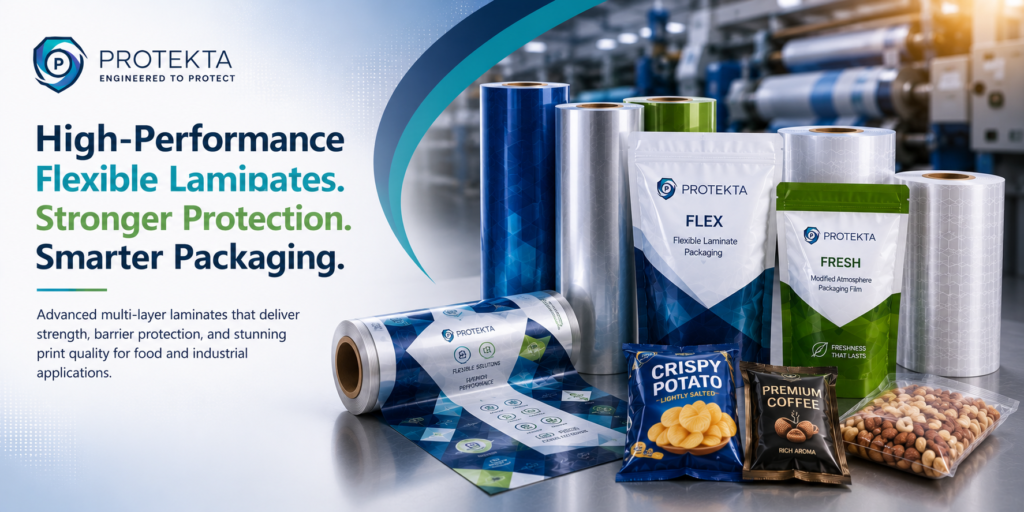
Every time you tear open a packet of chips, peel back a coffee sachet, or grab a shampoo pouch off a shelf, you are interacting with flexible laminate packaging. It is everywhere and for good reason. These multi-layer structures do something no single material can do on its own: they combine the strengths of different films into one reliable, lightweight, printable package.
India’s flexible packaging market was valued at approximately USD 18 billion in 2024 and is projected to grow at a CAGR of around 11–12% through 2030, according to data from Mordor Intelligence and ResearchAndMarkets. That growth is not accidental. It reflects real demand from food brands, industrial manufacturers, pharmaceuticals, and FMCG companies who need packaging that protects products, carries branding, and lowers logistics costs all at the same time.
This post breaks down what flexible laminates actually are, how they are constructed, where they are used, and what trends are shaping the space right now.
What Are Flexible Laminates for Packaging?
Flexible laminates are composite films made by bonding two or more layers of materials, typically plastic films, aluminium foil, paper, or combinations of these, using adhesives or heat lamination. Each layer in the structure serves a purpose. The outer layer handles printing and aesthetics. Middle barrier layers block oxygen, moisture, light, or odours. The inner sealant layer bonds when heat is applied during filling and sealing.
Here is what makes them different from single-layer films: no individual material can do everything well at once. BOPP (Biaxially Oriented Polypropylene) offers excellent moisture resistance and clarity. PET (Polyethylene Terephthalate) brings high tensile strength and thermal stability. CPP (Cast Polypropylene) provides a strong, reliable heat seal. When you laminate these together, you get a structure that handles moisture, oxygen, mechanical stress, and printing in one thin, flexible sheet.
The most common laminate structures in Indian food and industrial packaging include:
-
- Two-layer laminates typically BOPP/CPP or BOPP/PE for dry food like biscuits, snacks, and staples
-
- Three-layer laminates such as PET/Met.PET/PE or PET/AL/CPP for coffee, tea, and high-barrier applications
-
- Metallised laminate structures where a vacuum-deposited aluminium layer on BOPP or PET adds barrier performance without the weight of foil
Why the Demand for Flexible Packaging Films and Laminates Is Rising
Food Safety and Extended Shelf Life
The most direct reason manufacturers turn to laminates is shelf life. Oxygen and moisture are the two main enemies of most packaged foods. A well-designed barrier laminate can limit oxygen transmission to under 1.8 cc/m²/24hrs (PET-based structures), significantly slowing spoilage. For categories like potato chips, coffee, and biscuits, this is the difference between a product that stays fresh for weeks versus one that goes stale in days.
India’s processed food sector has expanded rapidly, driven by urbanisation and changing consumption habits. The food and beverage segment accounted for nearly half of India’s packaging market demand in 2024, per Mordor Intelligence data. Longer supply chains, especially as brands reach smaller towns and rural markets, make barrier packaging more important than ever. Laminates for food packaging directly answer this need.
Lightweight and Cost Savings in Logistics
Flexible laminates weigh considerably less than rigid alternatives like glass or metal cans. Converters who switched from rigid containers to flexible pouches cut freight costs by up to 70%, according to Mordor Intelligence packaging data. For large FMCG brands shipping millions of units, this is a material business advantage, not a marginal one.
Printability and Brand Communication
Modern laminate films, particularly BOPP and PET-based structures, accept flexographic and rotogravure printing well. Brands can achieve sharp graphics, vivid colours, and accurate colour matching directly on the outer film before lamination. This turns the package into a branding surface without adding extra cost for labels or sleeves.
Common Applications: Where Flexible Laminates Are Used
Laminates for Food Packaging
This is the largest application segment by volume. Flexible laminates are the standard packaging format for:
-
- Snacks and potato chips typically BOPP/VMCPP or BOPP/VMBOPP structures with high moisture and oxygen barriers
-
- Biscuits and bakery items two-layer BOPP/CPP or three-layer PET/AL/CPP for products requiring moderate to high barrier
-
- Tea and coffee PET/VMPET/PE or PET/AL/CPP pouches that protect aroma and freshness over extended shelf life
-
- Salt, sugar, and wheat flour milky or opaque two-layer BOPP laminates with PE sealant layers
-
- Sauces and shampoos multi-layer structures incorporating nylon or PET for puncture resistance in liquid products
The choice of structure depends on the product’s sensitivity to oxygen, moisture, light, and temperature. A dry snack needs a different laminate than a liquid detergent, even though both ship in flexible pouches.
Industrial Flexible Packaging
Beyond food, flexible laminates are widely used in industrial applications. This includes:
-
- Detergent and cleaning powders where opaque multilayer laminates prevent moisture ingress
-
- Hair oil and personal care liquids typically using high-puncture-resistant PET/PE or nylon-based laminates
-
- Agricultural inputs fertiliser and seed packaging using high-strength laminates that resist UV degradation and moisture
-
- Industrial components metallised CPP-based laminates protect electronics and hardware from moisture, dust, and static
Industrial flexible packaging must meet different standards from food packaging. It prioritises mechanical toughness, chemical resistance, and performance under storage conditions rather than food contact compliance.
Key Materials Used in Modern Flexible Laminate Packaging
Let’s break down the main films a flexible laminate packaging manufacturer works with:
BOPP (Biaxially Oriented Polypropylene): The most widely used plastic film in food packaging globally. It has excellent water vapour barrier (WVTR of 1.5–5.9 g/m²/24hrs for 100µm film), high clarity, and good printability. Typically used as the outer layer in two and three-layer structures. Metallised BOPP adds oxygen barrier capability.
PET (Polyethylene Terephthalate / BOPET): Higher tensile strength and thermal stability than BOPP. Oxygen barrier is excellent (OTR as low as 1.8 cc/m²/24hrs for 100µm film). Used as the outer layer in high-performance retort pouches and barrier laminates.
CPP (Cast Polypropylene): Used as the inner sealant layer. It heat-seals reliably at moderate temperatures, offers good gloss, and provides cold and impact resistance. Common in BOPP/CPP and PET/CPP structures. Metallised CPP (VMCPP) adds significant barrier performance.
Aluminium Foil: The highest-performance barrier layer available. Pinhole-free foil in structures like PET/AL/CPP delivers near-complete protection against oxygen, moisture, light, and aroma. Used in retort pouches, pharmaceuticals, and premium food formats.
PE (Polyethylene): The sealant layer in many laminate structures. LDPE is heat-sealable and provides a good water vapour barrier at low cost. LLDPE offers improved toughness.
Top Trends Shaping the Flexible Packaging Manufacturer Industry in India
1. Recyclable and Mono-Material Structures
India’s 2022 ban on specific single-use plastics has pushed converters and brands toward more responsible packaging designs. The trend today is mono-material laminates structures made entirely from one polymer family (for example, all-PP or all-PE) which are easier to recycle than mixed-material multilayer films. This is changing what flexible laminate packaging manufacturers are asked to produce, with growing demand for recyclable two-layer BOPP or PE-based laminates.
2. Modified Atmosphere Packaging (MAP)
MAP films, which control the gas environment inside a sealed package to extend fresh food shelf life, are growing fast in India’s fresh produce, meat, and dairy segments. These are a specialised category of flexible laminates designed with precise oxygen and CO₂ transmission rates. Protekta’s PROTEKTA FRESH line addresses exactly this demand multi-layer MAP films built for extended shelf life and fresh food protection.
3. Stand-Up Pouches and Resealable Formats
Consumer preference has clearly shifted toward convenience formats. Stand-up pouches with resealable zippers are now standard in coffee, pet food, dry fruits, and premium snacks. These formats use complex laminate structures that must maintain barrier performance even with repeated opening and sealing cycles.
4. High-Resolution Printing on Laminates
High-resolution printing directly on laminate films is becoming more accessible. Short-run digital printing now lets smaller brands get professionally printed flexible packaging without the high plate costs of rotogravure. This has lowered the entry barrier for artisanal food brands wanting branded laminate pouches.
5. Growth in E-Commerce Packaging
India’s e-commerce sector is projected to reach USD 200 billion by 2026, according to the India Brand Equity Foundation (IBEF). This growth directly increases demand for industrial flexible packaging lighter, tougher, and printable formats that can handle multiple shipping hand-offs without damage.
What to Look for in a Flexible Packaging Manufacturer in India
If you are sourcing laminates, here is what matters beyond price:
Barrier specification clarity: A good manufacturer should be able to specify OTR and WVTR values for the laminate structures they supply, not just describe the film types used.
Structure customisation: Your product’s shelf life and transport conditions determine the laminate structure required. The manufacturer should design around your requirements, not sell you a standard roll.
Consistency in reel form: For high-speed packaging lines, even small variations in film thickness, COF (coefficient of friction), or sealing temperature range cause downtime. Consistency matters as much as specification.
Range of formats: Can the manufacturer supply both reel form for form-fill-seal (FFS) machines and pre-formed pouches? Having both options under one roof reduces supply chain complexity.
Protekta, backed by over 20 years of flexible packaging experience through its parent company Girdhar Roll Wrap, supplies a full range of flexible packaging films and laminates from its Bhiwadi, Rajasthan facility. The PROTEKTA FLEX range covers two-layer, three-layer, BOPP metalized, BOPP opaque, perlised, and shrink-film printed structures catering to food, personal care, and industrial packaging requirements. Protekta also supplies PROTEKTA FRESH for MAP film applications and a range of surface protection films for industrial use.
You can explore the full product range at protekta.in.
Frequently Asked Questions
Q1. What is flexible laminate packaging, and how is it different from single-layer film?
Flexible laminate packaging is a multi-layer structure made by bonding two or more films such as BOPP, PET, CPP, or aluminium foil. Unlike single-layer film, each layer serves a specific function: printing, barrier, or sealing. This combination delivers far better protection, shelf life, and mechanical performance than any single film can achieve on its own.
Q2. Which laminates are best suited for food packaging with long shelf life?
For products needing maximum shelf life, PET/AL/CPP three-layer structures or metallised BOPP/VMCPP laminates are widely used. These offer very low oxygen and moisture transmission rates. For dry snacks and biscuits, BOPP/CPP is often sufficient. The right choice depends on the product’s sensitivity to oxygen, moisture, light, and temperature.
Q3. How do I choose the right flexible packaging manufacturer in India?
Look for a manufacturer who can specify barrier properties (OTR and WVTR values), offers structure customisation based on your product needs, supplies consistent reels for high-speed lines, and provides both reel form and pre-formed pouches. Experience across food and industrial packaging segments is a good indicator of technical depth.
Q4. What are the environmental concerns around flexible laminates, and how is the industry responding?
Traditional multi-material laminates are difficult to recycle because different polymer layers cannot be easily separated. The industry is responding with mono-material laminates (all-PP or all-PE structures) that fit existing recycling streams. Biodegradable and compostable flexible films are also emerging, though their commercial scale and cost-competitiveness in India are still developing.
Q5. Can flexible laminates be used for industrial products, not just food?
Absolutely. Industrial flexible packaging including packaging for detergents, fertilisers, hardware components, personal care products, and agricultural inputs uses flexible laminates extensively. These applications prioritise puncture resistance, chemical resistance, and moisture protection over food contact compliance. Metallised and multi-layer structures are common choices.