
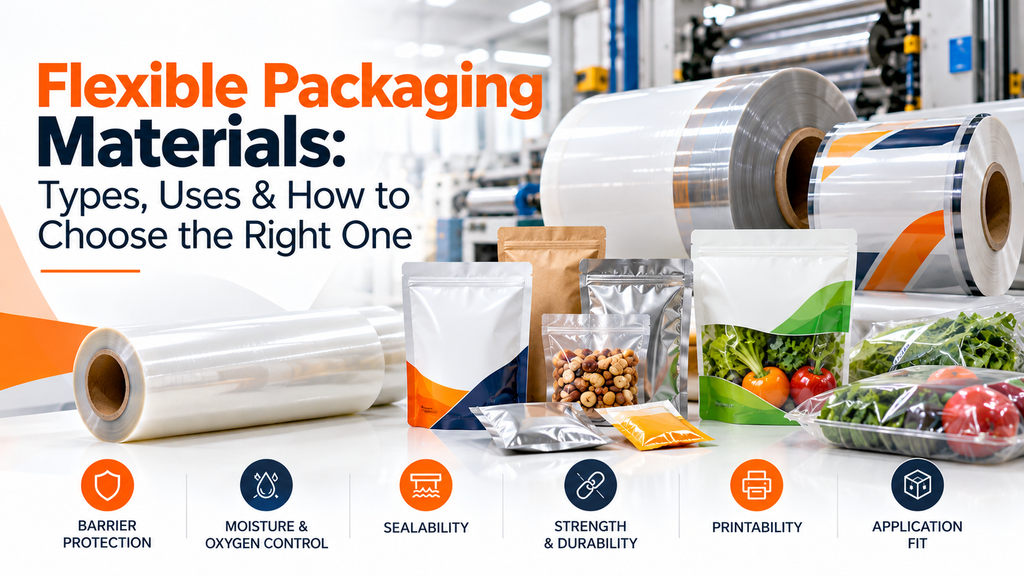
A biscuit turns soft. A tea pack loses its aroma. A detergent pouch splits in transit. Each problem often traces back to one mistake: the wrong packaging structure for the product. Picking flexible packaging materials sounds easy until you start comparing films, foils, and laminates. Then the abbreviations pile up fast: PET, BOPP, CPP, MetPET.
Let’s break it down. This guide explains what these materials are, how each one behaves, and where it works best. You will also get a step-by-step selection method, a quick look at Indian food-contact rules, and answers to common questions.
What Is Flexible Packaging?
The Flexible Packaging Association defines a flexible package as a container made from easily yielding materials that can change shape once filled or closed. Makers can build it from paper, plastic film, foil, or any mix of them, and it usually takes the form of a bag, pouch, liner, wrap, sleeve, or rollstock.
You handle these packs every day. Chip bags, shampoo sachets, flour bags, and medicine packs all count. Brands like them because they weigh little, take print well, and fit many product shapes. The industry is big, too. The association estimated U.S. sales at $42.9 billion in 2022, up from $37.2 billion in 2021.
Here is the catch. No single material does every job. Most packs combine layers so each layer handles one task, such as printing, sealing, or blocking moisture.
Common Types of Flexible Packaging Materials
Short answer first. Most flexible packs use one or more of these:
- Paper: gives a natural look and a printable surface, but needs a film or foil layer for barrier.
- PET (polyester) film: stiff, strong, and a good oxygen barrier.
- BOPP film: clear or opaque film with better moisture resistance than PET.
- CPP film: soft, tear-resistant film that often forms the sealing layer.
- Aluminum foil: a very strong barrier to light, moisture, and gases.
- Metallized films (MetPET, Met BOPP): plastic film with a thin metal coating for added barrier.
Now let’s look at each one.
PET (Polyester) Film
PET typically offers excellent oxygen barrier and moderate moisture barrier, and it usually beats BOPP on stiffness and tensile strength. That strength makes PET a common outer layer in a laminate. It holds its shape on filling machines and carries print well.
BOPP Film
BOPP stands for biaxially oriented polypropylene. It improves on PET’s moisture barrier, and without barrier coatings or metallization it typically costs less than PET. You will see BOPP in clear, opaque, pearlized, and heat-sealable forms. Snack makers and bakers use it often.
CPP Film
Cast polypropylene, or CPP, is a very soft film that resists tears and punctures and offers high seal strength and burst strength. Packers usually place it on the inside of a pouch, where it melts and bonds to form the seal.
Aluminum Foil
Foil blocks light, moisture, and gases better than plain plastic films. That makes it a common choice for medicines and for products that spoil when exposed to air. The trade-off is higher cost and a pack you cannot see through.
Metallized Films
Metallizing PET or BOPP changes how the film performs. Met BOPP often carries a low-temperature heat-seal layer, so it can work in a two-layer lamination. MetPET often lacks that sealing layer and tends to appear in three-layer laminates. A Cosmo Films release says its metallised BOPP suits biscuits, snacks, bakery items, chocolates, and shampoo sachets, where moisture barrier matters most.
Paper, PVC, and Shrink Films
Paper rarely works alone for packs that need barrier. Converters usually pair it with film or foil. PVC film and printed shrink film serve a different job. Heat pulls shrink film tight around a product, and its surface carries your branding.
Quick Comparison
| Material | Main strength | Common role in a pack |
| PET | Stiffness, oxygen barrier | Outer layer |
| BOPP | Moisture barrier, clarity, lower cost | Outer or middle layer |
| CPP | Tear resistance, seal strength | Inner sealing layer |
| Aluminum foil | Light, moisture, and gas barrier | Middle barrier layer |
| Metallized film | Added barrier at low weight | Middle or sealing layer |
Why Laminates Work Better Than Single Layers
Barrier against oxygen, moisture, light, and contaminants decides how long a product stays fresh. One film rarely blocks all four and also seals well. So converters bond films together into a laminate.
Here is a simple way to picture it:
- Two-layer laminate: a printable outer film bonded to a sealable inner film. It suits products with moderate barrier needs.
- Three-layer laminate: adds a middle barrier layer, such as metallized film or foil. It suits products that spoil fast or lose aroma.
Cosmo Films describes its metallized BOPP as a film generally used inside duplex or triplex laminates alongside OPP, PET, or PE. That setup shows how makers stack films so each one covers a weakness in the next. For more information on choosing the right film thickness for protective applications, see this guide on ACP protection film thickness and how to choose the right micron.
Each layer adds cost and weight, so aim for enough layers to protect the product and no more.
Where Each Material Works Best
Different products fail in different ways. Match the failure to the film. Use these pairings as starting points, not fixed rules:
- Biscuits, cookies, chips, and snacks: Moisture makes them stale, and oxygen and light turn fats rancid. Metallized or barrier laminates fit well.
- Chocolate and candy: They need moisture control and a clean print finish. Heat-sealable BOPP laminates are a common match.
- Salt, wheat flour, and detergent powders: Humidity clumps them, and sharp grains can stress the pack. Look for moisture resistance and puncture strength.
- Shampoos and hair oil: Liquids and oils demand strong seals and leak resistance.
- Tea and coffee: Aroma loss is the main enemy, so these products need a high barrier.
- Medicines: Most need tight protection from moisture and light, so foil-based structures are common.
- Industrial products: Handling, stacking, and transit put the most stress on these packs, so strength comes first.
Your own product may behave differently. Fat content, powder fineness, and storage heat all change the answer.
How to Choose the Right Flexible Packaging Film
Follow these steps to pick a flexible packaging film with confidence.
- Name the main threat. Ask what damages your product first. Moisture and oxygen do not always carry equal weight, so decide which one matters more.
- Set a shelf life target. A product that sells in two weeks needs less barrier than one that sits for six months.
- Match the seal to your machine. Decide early whether you will use heat sealing or cold sealing. The film must suit your filling line.
- Check strength needs. Think about sharp contents, drops, and stacking in warehouses.
- Pick the look. Clear film lets buyers see the product. Opaque, pearlized, or metallized finishes change shelf appeal.
- Confirm food-contact compliance if the pack touches food.
- Run a trial. Test samples on your own line and in your real storage conditions.
- Compare cost against waste. A cheaper pack that spoils product costs more in the end.
Check Food-Contact Rules in India
Food packs in India fall under the Food Safety and Standards (Packaging) Regulations, 2018. Any material that touches food must be food grade, must suit the product, storage conditions, and filling equipment, and must withstand the mechanical, chemical, and thermal stresses of normal transport.
Laminates get their own rule. In a multilayer pack, the layer that touches food, and any layer likely to touch it, must meet the schedule requirements for its material. The rules also say the printed surface of packaging material must not come into direct contact with food. Converters usually keep print away from the food side for this reason.
Rules can change. FSSAI has released draft amendments that would ban PFAS in food contact materials and require polycarbonate and epoxy materials to be free of BPA. Check the current status on the FSSAI website before you approve a specification.
Mistakes That Cost Money
Watch for these common errors:
- Paying for more barrier than the product needs.
- Choosing a film that does not match your sealing jaws.
- Skipping line trials because a spec sheet looked fine.
- Ignoring transit. A pack that survives the shelf can still fail in a truck.
- Letting printed film touch food.
A Look at the Protekta Flex Range
A real product range shows how these material types fit together. Protekta Flex, made by Girdhar Roll Wrap Ltd., supplies flexible laminate packaging rolls and pouches. Its multilayer sheets combine materials such as PET, paper, and aluminum. The range draws on PET, Met PET, BOPP, Met BOPP, CPP, and barrier films.
The product page lists these laminate types:
- Two layer laminates
- Three layer laminates
- BOPP two layers
- BOPP metalized two layer
- BOPP heat-sealable
- BOPP opaque
- Pearlized finishes
- Milky two layers
- MC reels of PVC film
- Printed shrink film
- Aluminum foil polyester film
- Printed glass in poly
Buyers can order in reel form or as pre-formed pouches. The page also names uses such as biscuits, chocolate, candy, salt, wheat flour, detergent powders, shampoos, hair oil, tea and coffee, chips, medicines, and industrial products. It lists eco-friendly options as well.
Notice how the list mirrors the types above. Two-layer and three-layer laminates match the structures we covered. The metalized and foil items match the barrier layers.
Next Steps
Write a one-page spec before you talk to any supplier. Include your product, its biggest threat, your shelf life target, your sealing method, the look you want, and any food-contact needs. Then request samples and run a trial on your line.
If you want to see a full range of laminate options laid out, visit the Protekta Flex page.
FAQs
Which materials are most common in flexible packs?
Most packs use paper, PET, BOPP, CPP, aluminum foil, or metallized film. Makers often bond two or three of them into a laminate. Each layer handles a job such as printing, barrier protection, strength, or sealing.
What is the difference between BOPP and PET film?
PET offers a stronger oxygen barrier and higher stiffness. BOPP offers better moisture barrier and usually costs less unless you add coatings or metallization. Many laminates pair them so each film covers the other’s weak spot.
Why do packs use laminates instead of one film?
One film rarely blocks moisture, oxygen, light, and contaminants while also sealing well and printing sharply. A laminate stacks films so each layer does one task. You get better shelf life from a thin, light pack.
Which flexible packaging film works best for snacks?
Snacks need strong moisture and oxygen protection plus a reliable seal. Metallized BOPP and MetPET laminates are common choices. Fat content, shelf life target, and your filling machine decide the final structure, so test samples first.
Does food packaging in India need to be food grade?
Yes. FSSAI rules require food-grade quality for any material that touches food. In multilayer packs, the layer that contacts food must meet the schedule requirements, and printed surfaces must stay off the food side.
Pingback: Flexible Packaging for Food Products: Benefits, Materials and Applications