
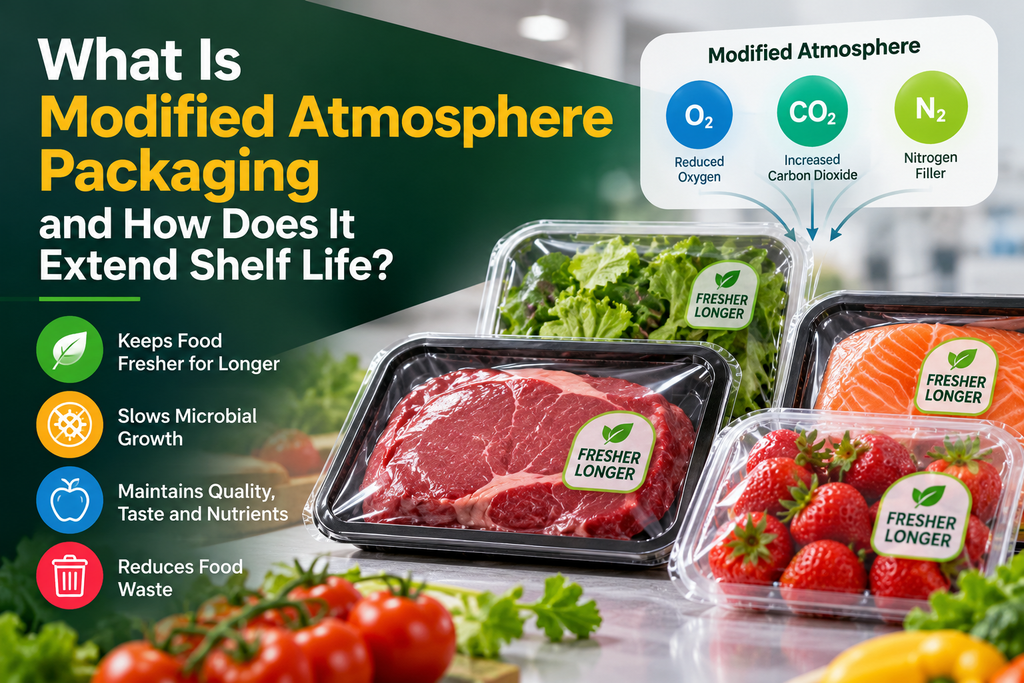
Two packs of the same food can last very different lengths of time. The air sealed inside often explains the gap. Food makers can swap that air for a controlled gas mix, and the method is called modified atmosphere packaging, or MAP for short.
This guide covers what MAP is, which gases do the work, and why spoilage slows down. You will also see where the method falls short and what to check before you use it. Let’s break it down.
What Is MAP Packaging?
MAP packaging replaces the normal air inside a sealed food pack with a controlled mix of gases, usually nitrogen, carbon dioxide, and oxygen. The new atmosphere slows the reactions that spoil food, so the product stays fresh longer.
Ordinary air is about 78% nitrogen and 21% oxygen, with only 0.04% carbon dioxide. Packers change that balance to cut down chemical, enzymatic, and microbial reactions around the food. Oxygen causes most of the trouble. Aerobic bacteria and moulds need it to grow, and it turns fats rancid over time. Cut produce browns faster in it, too. Swap in a calmer mix, and each of those problems moves more slowly.
You may also hear the term gas flushing. One packaging equipment maker uses that name for the same idea. It adds that MAP usually works with a barrier film that lets very little oxygen through.
How MAP Extends Shelf Life: Here Is Why
Food spoils in three main ways. MAP goes after each one.
It Slows Microbial Growth
Carbon dioxide holds back most aerobic bacteria and moulds. Higher levels usually mean longer life. Many foods need at least 20% to 30% carbon dioxide before the effect shows up.
It Limits Oxidation
Take oxygen out and fats break down more slowly. That is why packers flush dried snack foods with 100% nitrogen. The gas keeps them from going rancid.
It Calms Respiration in Fresh Produce
Fruits and vegetables stay alive after harvest. They keep using oxygen and giving off carbon dioxide. Cutting oxygen and raising carbon dioxide lowers that respiration rate. Quality loss and spoilage then slow down too.
Some packs go a step further. A University of Guelph food scientist notes that active packaging can scrub ethylene, a plant gas that speeds ripening. That helps certain fruits last longer.
MAP in Five Steps
- A packer places the food in a tray, pouch, or container.
- A machine removes the air and flushes in the chosen gas mix.
- A barrier film or lid seals the pack tight.
- The sealed pack moves through cold storage and transport.
- The gas mix keeps slowing spoilage until a shopper opens the pack.
Which Gases Does MAP Use?
Each food gets its own mix. Here is the short version:
- Carbon dioxide: Fights bacteria and moulds. Fat and water absorb it, though, and that can make a pack collapse.
- Nitrogen: An inert gas that pushes out air and fills leftover space, so the pack holds its shape.
- Oxygen: Usually kept low. Some foods still need a little. Fresh red meat needs oxygen to hold its red colour, and living produce needs some to keep respiring.
Mixes change by product. Bread and cakes are porous and prone to microbial growth, so packers pair carbon dioxide with nitrogen. A University of Limerick researcher describes a well-matched salad pack as holding about 3% oxygen while carbon dioxide climbs to about 5%. Normal air holds 21% oxygen.
Two Ways to Build the Atmosphere
Gas Flushing for Meat, Dairy, and Ready Meals
The packer sets the mix at the sealing stage. A machine pulls out the air and fills the pack with the chosen gases. The film then locks that mix in place.
Film-Matched Packs for Fresh Produce
Produce changes the atmosphere on its own. As it respires, it uses oxygen and releases carbon dioxide, while gases also move through the film. A good design matches the produce’s respiration rate to how fast the film passes gas.
Get that match wrong and problems follow. The Limerick researcher warns that an overly tight film can strip out all the oxygen. Research also shows that temperature, oxygen level, carbon dioxide level, and storage time all affect respiration rate. A pack that works at 4°C may behave differently on a warm loading dock.
MAP vs Vacuum Packing: What Is the Difference?
People often mix these two up. Let’s break it down.
Vacuum packing pulls the air out and leaves nothing in its place. The film hugs the food tightly. MAP removes the air and then adds a chosen gas mix, so the pack keeps a cushion of gas around the food. That cushion protects soft or delicate items, such as baked goods, cut vegetables, and sliced cheese, from being squashed.
The two methods share one risk. Both create a low-oxygen space, and food safety regulators treat vacuum packed and MAP chilled foods together when they write guidance on Clostridium botulinum. We cover that in the safety section below.
Which Foods Benefit Most From MAP?
Foods that spoil fast in normal air gain the most. Meat, fish, poultry, and dairy all have short lives when oxygen is present. Fresh produce adds a second problem, because it keeps respiring after harvest.
Here is how the pattern looks across common foods:
- Raw and marinated meat: Needs low oxygen to slow bacteria, with enough oxygen in some packs to hold colour.
- Cheese and dairy: Needs a strong moisture and oxygen barrier.
- Bakery items and desserts: Needs carbon dioxide and nitrogen to hold back mould.
- Ready-to-eat meals: Needs a tight seal and a barrier lid, since these foods are often eaten without further cooking.
- Cut fruit and vegetables: Needs a film matched to the respiration rate.
One gas supplier also reports that argon gives better results than other mixes for packed salads, especially in the last days of shelf life. Treat that as a supplier claim and test it against your own product.
How Much Longer Can Food Last With MAP?
Gas supplier Linde shares indicative figures for its own system:
- Cakes: from several weeks to up to one year
- Pizza: from 7 to 10 days to 2 to 4 weeks
- Raw red meat: from 2 to 4 days to 5 to 8 days, stored below 38°F (3.3°C)
Treat these as supplier figures, not promises. Results depend on the food, gas mix, film, hygiene, and storage temperature. Fresh-cut salad packs often reach about five days under refrigeration.
Shelf life gains also cut waste and returns. Retailers can stock products longer, and shoppers get more time to eat what they buy.
Why the Packaging Film Matters
The gas inside is only half the system. The film holds it there. A weak barrier lets oxygen creep back in and lets your carefully chosen mix leak out.
Take the Protekta Fresh range as a real-world case. Girdhar Roll Wrap Ltd. makes these MAP films at its manufacturing unit in Bhiwadi, Rajasthan. The product page lists five film types:
- MAP Sealing Film: Seals containers or trays tightly.
- MAP Barrier Lidding Film: Adds a stronger moisture and oxygen barrier, aimed at dairy and ready meals.
- MAP Barrier Sealing Film: Pairs strong seals with high protection.
- Sealing Film: An all-purpose film with good clarity and strength.
- Easy Peel Lidding Film: Opens cleanly without harming the food.
The same page names five uses: ready-to-eat food trays, dairy and cheese, marinated or raw meat, fresh vegetables and fruits, and bakery items and desserts. It also says the films suit trays, containers, and pouches, and work with hot-fill, cold-fill, or vacuum-sealed formats.
The page does not publish shelf life numbers. So no manufacturer’s film should replace your own trials. Test any film with your product, gas mix, and real storage conditions.
Is MAP Safe? Know the Limits
MAP slows spoilage. It does not make unsafe food safe. Here is why that matters.
Some bacteria do not need oxygen. Clostridium botulinum can grow and make toxin in vacuum and MAP chilled foods if temperature control slips. The UK Food Standards Agency publishes guidance for makers of these foods and ties it to HACCP procedures. Learn more about flexible packaging for food products. US guidance for reduced-oxygen products calls for strict refrigeration at or below 40°F (4.4°C) during storage and distribution.
Other limits are easier to spot:
- Carbon dioxide absorption can collapse a pack.
- The wrong film produces the wrong atmosphere.
- Warm storage speeds up respiration in produce.
- Gas mixes that suit one food can harm another.
Cold storage still matters, then. MAP and refrigeration work as a pair, not as substitutes.
Next Steps: Checking Whether MAP Fits Your Product
Run through this list before you commit to a pack design:
- Name the main spoilage risk: microbes, fat oxidation, or produce respiration.
- Pick a gas mix that suits that food, and ask your food-grade gas supplier to confirm it.
- Choose a barrier film with the right oxygen and moisture resistance.
- Trial the pack at real storage and transport temperatures.
- Plan the cold chain, and print storage temperature and use-by dates on the label.
Wrapping It Up
MAP packaging works by changing the air around food so that bacteria, oxidation, and respiration all slow down. The gas mix matters, but so does the film that holds it in, and so does the cold chain after the pack leaves the factory.
If you want to see how one manufacturer lays out its MAP films, the Protekta lists the film types and food uses in plain terms.
FAQs About MAP
What does MAP stand for in food packaging?
MAP stands for modified atmosphere packaging. It means replacing the air inside a sealed food pack with a chosen gas mix, usually nitrogen, carbon dioxide, and oxygen. The new atmosphere slows spoilage so the food stays fresh for longer.
Which gases do food makers use in MAP?
Most packs use nitrogen, carbon dioxide, and oxygen in different ratios. Carbon dioxide fights bacteria and moulds, nitrogen fills space and pushes out air, and oxygen stays low unless the food needs it, such as fresh red meat.
How long can MAP extend shelf life?
It depends on the food. A gas supplier reports raw red meat moving from 2 to 4 days to 5 to 8 days, and pizza from 7 to 10 days to 2 to 4 weeks. Film, hygiene, and temperature change the result.
Is food in a MAP pack safe to eat?
Yes, when makers follow food safety rules and keep the right storage temperature. MAP slows spoilage but cannot fix poor hygiene or warm storage. Always check the label for storage temperature and the use-by date.
Does food in a MAP pack still need refrigeration?
For most fresh foods, yes. MAP slows spoilage without stopping it. Raw meat, fresh-cut salad, and ready meals still need cold storage. US guidance for reduced-oxygen packs points to strict refrigeration at or below 40°F (4.4°C).
Pingback: MAP Packaging for Fresh Produce: How It Reduces Food Waste and Extends Freshness